


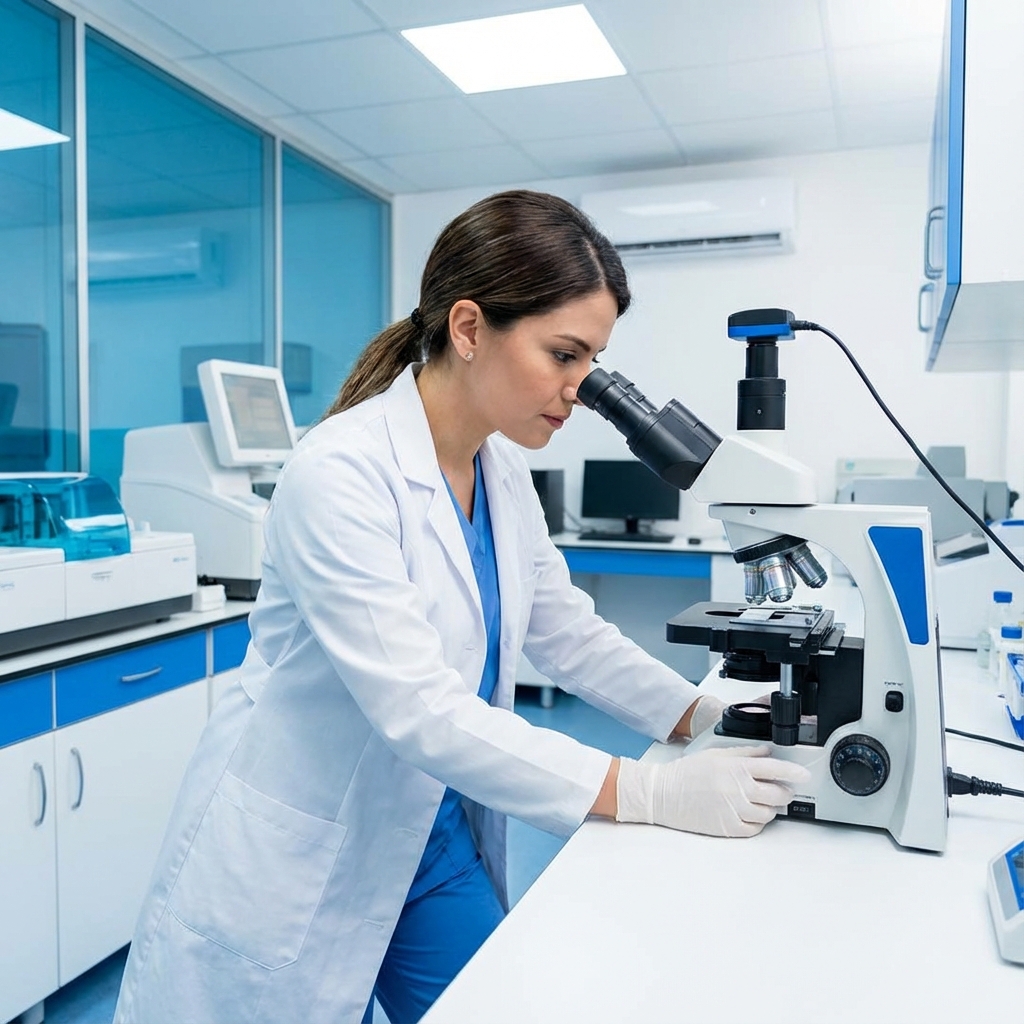
Cervical Cancer & HPV Screening
Early Detection Can Save Your Life
Cervical Cancer & HPV Screening chez TEKlaB
Cervical cancer is highly preventable through regular screening. HPV (Human Papillomavirus) causes 99% of cervical cancers, but early detection through Pap smears and HPV testing can prevent it.
Important Facts
- Cervical cancer is the 4th most common cancer in women worldwide
- HPV is the most common sexually transmitted infection
- Regular screening can prevent 93% of cervical cancers
- Most women with HPV never develop cancer - screening identifies high-risk cases
Types of Cervical Screening
Pap Smear (Cytology)
Examines cervical cells under microscope to detect abnormal changes before cancer develops.
HPV DNA Test
Detects high-risk HPV types (16, 18, etc.) that cause 70% of cervical cancers.
Co-Testing
Pap + HPV together - most comprehensive screening (recommended for 30+).
HPV Genotyping
Identifies specific HPV types (16/18) for more precise risk assessment.
Who Should Get Screened?
- Ages 21-29: Pap smear every 3 years
- Ages 30-65: Pap + HPV co-testing every 5 years (preferred) OR Pap alone every 3 years
- Ages 65+: Can stop if adequate prior screening and no abnormal results
- High-risk women: More frequent testing (HIV+, immunocompromised, DES exposure)
- After hysterectomy: Usually not needed if no cervix and no history of cancer
Risk Factors for Cervical Cancer
- HPV infection - Especially types 16, 18, 31, 33, 45, 52, 58
- Smoking - Doubles the risk
- Weakened immune system - HIV, immunosuppressive drugs
- Multiple sexual partners - Increases HPV exposure
- Early sexual activity - Before age 18
- Long-term oral contraceptive use - 5+ years
- Multiple pregnancies - 3 or more full-term
Understanding Your Results
| Result | Meaning | Next Steps |
|---|---|---|
| Normal/Negative | No abnormal cells or HPV | Routine screening in 3-5 years |
| HPV Positive | HPV detected but no cell changes | Repeat in 1 year or colposcopy |
| ASCUS | Atypical cells of uncertain significance | HPV test or repeat Pap |
| LSIL | Low-grade changes (mild dysplasia) | Colposcopy recommended |
| HSIL | High-grade changes (moderate-severe) | Colposcopy + possible treatment |
| Cancer Cells | Abnormal cells present | Urgent colposcopy + biopsy |
Test Preparation
- Schedule between periods - Best 10-20 days after first day of period
- No intercourse - Avoid 48 hours before test
- No douching - Avoid 48 hours before
- No vaginal products - No creams, foams, gels 48 hours before
- Not during period - Reschedule if menstruating
HPV Vaccination
The HPV vaccine (Gardasil 9) protects against 9 HPV types causing 90% of cervical cancers. Best given ages 9-26, but can be given up to age 45. Vaccination does NOT replace screening - both are important.
What Happens If Results Are Abnormal?
- Colposcopy - Detailed examination of cervix with magnification
- Biopsie - Small tissue sample for precise diagnosis
- Treatment options: LEEP, cryotherapy, cone biopsy (if needed)
- Follow-up - More frequent monitoring after treatment
Complete Privacy
All screening is conducted with complete confidentiality. Your results are private and secure.
Horaires
- Lun-Ven07:30-19:00
- Samedi08:30-17:00
- Dimanche09:00-14:00
Related Women's Tests
Schedule Your Cervical Dépistage du Cancer Today
Regular screening can prevent 93% of cervical cancers. Don't wait.
Réserver Maintenant